
What Is A Cash Buyout Offer?
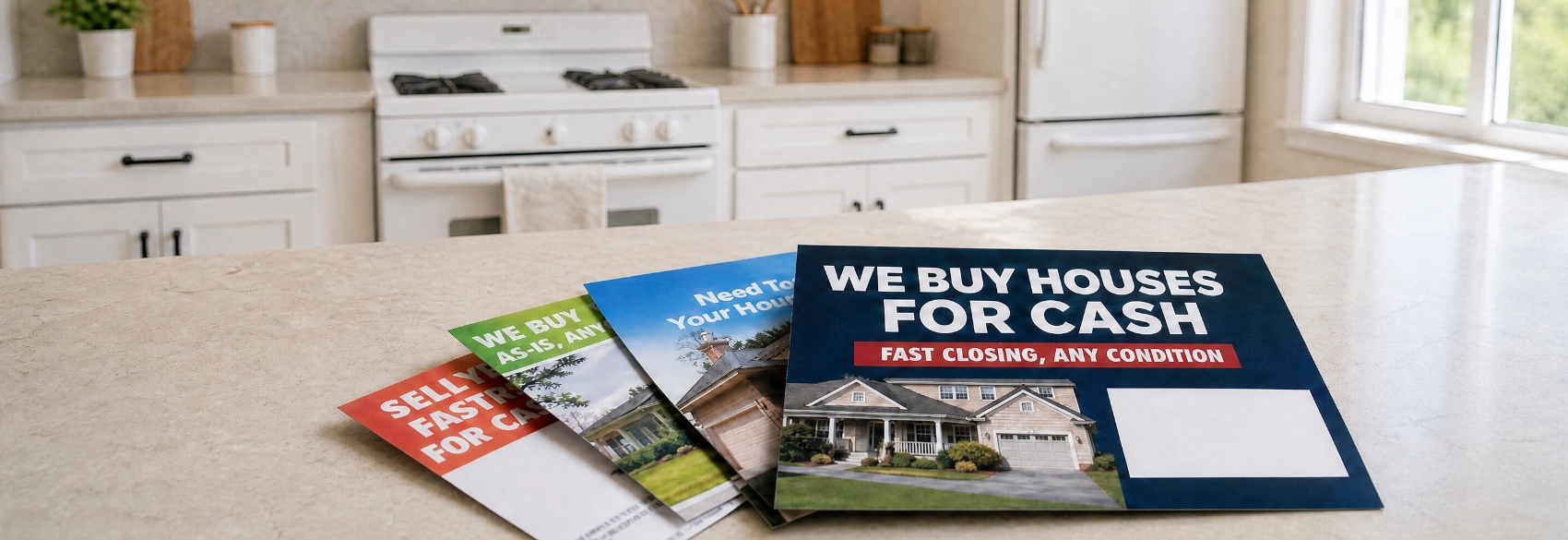
A True Cash Offer vs. A Buyout Cash Offer
The phrase "Cash Offer" gets used loosely to refer to two home selling situations that are very different.
A true cash offer is received from a buyer that has most likely toured your home, likes it and is making an offer because they plan on living in your house. The offer does not include financing - no mortgage or mortgage contingency. They have the funds to bring to closing as cash. This buyer has competed for your home on the open market and is bringing the strongest offer a seller can receive - a cash offer. If that's the kind of cash offer you have, that's good news, not a reason for caution.
A cash buyout offer comes from buyout companies sometimes called iBuyers, house flippers, or "we buy houses" outfits. Their offer is based on a financial analysis that they can improve or renovate, and re-market your home to make a profit. Many prefer to deal directly with the seller and not through a real estate agent. This may not be to your advantage in that, you have no one representing your side but you think you're saving the real estate commission.
Not every buyout company works the same way, though. iBuyers like Opendoor and Offerpad price your home using recent comparable sales and charge a transparent flat fee, landing offers closer to market value, usually in the 85–95% range. Investor and flipper buyers use the after-repair-value formula walked through below, and their offers typically land lower, in the 50–70% range, because more of the discount goes toward renovation profit rather than a disclosed fee. Knowing which type you're talking to changes what kind of number you should expect.
Sellers are attracted to buyouts because they buy your house as-is, close fast, and usually pay in cash, buy only if your home qualifies! It is all based on evaluating their risk and how they can profit from reselling your home in the open market. The discount can be as low as 10 to 15% or as high as 50%. Depending on the condition of your house and its location, some companies offer hybrid programs where you can participate in part of the upscaling profit. Cash Buyout Offers can be legit or a scam - find out more.
How These Offers Usually Reach You
There are a few different paths that lead a seller to a buyout company, and they carry different levels of trust:
- Your agent brings it up, usually because the house has genuinely struggled on the open market, or the repairs needed are beyond what you're able or willing to take on. This should have the highest trust level because you are protected by your agent who is bound by the listing agreement.
- The company contacts you first, postcards, cold calls, text messages, "we buy ugly houses" signage get your attention. These are marketing campaigns targeting homeowners directly, with no agent involved at all, and they're often the least favorable offers. There have been complaints about high-pressure tactics from some of these companies.
- You reach out to them. A seller who's decided speed or certainty genuinely matters most can actively request offers from two or three buyout companies and compare them. Price is not the only factor to compare: there are fees and sometimes hidden costs. This is a legitimate strategy if you've already decided a cash buyout is right for you, but get all the data up front before you sign anything.
When a Cash Offer Actually Makes Sense
Many sellers at some point ask the question: "Should I skip listing my home and consider a cash buyout offer where I get cash, no repairs, no showings, and a closing in two weeks. Is it a good deal?"
The honest answer is: sometimes. There are two key factors to consider: 1. Your life situation 2. Accurate data and information
Typical Life Situations
Thirty seconds after walking through the front door for a listing appointment in a well-kept neighborhood, we exchanged the same unspoken thought: no real estate agent would touch this with a ten-foot pole. This isn't worth the headache. What changed that was how Walter welcomed us and the obvious fact that he needed more help than just a listing agreement.
Read the full story
Not the usual listing appointment
We pulled up to a house on a nice, well-kept street, except for the lawn, which had clearly gone without attention for months. The yellow caution flag was up. We knocked. No answer. We were seconds from calling to confirm we had the right day when the door finally opened, and there was Walter, in his late sixties, leaning on a walker, clearly out of breath. Just reaching the door had been a chore, and he apologized for keeping us waiting.
We stepped through the front door and stopped. Clutter filled every room floor to ceiling. The family room, the kitchen, what might have once been a dining room now held a bed in the middle of it instead. The red flag was up even before we spotted the two-foot hole in the kitchen ceiling.
Will this house sell?
The usual listing appointment presentation didn't fit the situation. There was an immediate trust between us. Looking back, we think it came from being the only agents who hadn't turned around and walked out. What we needed to find out first was why he was selling, and what he expected from it.
We found out soon enough. Walter's health and financial circumstances meant he could no longer live in the house. Specifically, he could no longer manage the stairs, and that single fact was the real reason for the sale. He was a man in the middle of a genuinely hard, life-changing moment, and it was obvious within minutes that we wanted to help him, not just list a house. That instinct shaped every decision that came after it.
Analyzing the saleability of this house, we started counting the strikes against it. Clutter of this magnitude could sink a sale on its own. A two-foot hole in the kitchen ceiling raised an obvious question: what else was hidden? Food bowls on the floor for three cats and a dog added another strike. And the final strike: nothing in the house had been touched or updated since it was built.
But Walter's plan was to move into a single-floor condo owned by his daughter-in-law in Maryland, where he could live rent free. He just needed his house sold first.
There was no version of this house competing successfully on the open market. Left to sit, the only buyers who'd eventually show up were flippers hunting for a lowball number anyway, so the real decision wasn't open market versus buyout. It was doing the buyout the right way versus Walter getting scammed. We laid out the options and offered to build a plan around whatever he decided. He signed the listing agreement because, in his own words, "we told him the truth." The best plan was a cash buyout from a reputable company, if his house qualified.
Getting the house ready for a buyer
We suggested a light cleanup, just enough to make the house presentable to buyout companies. Walter's son, Pat, and a few friends pulled it off.
We called Ray's buyout company, one we'd worked with before and one that's genuinely selective about which properties it takes on, and held our breath waiting to hear if this one would even qualify. It did. Walter's house was in line for a complete interior and exterior renovation, enough to bring it up to the neighborhood standard.
Back to negotiating
Now we were back in the traditional agent role: negotiating with the buyer and making sure the deal actually closed. We ran the comps two ways, as-is and fully renovated. Ray, the investor behind the buyout company, has built a career on knowing exactly what homes fit his profit formula.
A complication nobody saw coming
We ran the numbers, and that's when the panic set in. Walter had told us he'd paid off his mortgage years ago and owned the house outright. What he hadn't told us, because he genuinely didn't remember, was that he'd taken out a reverse mortgage at some point, with no memory of who held it, how much was owed, or what its terms were. It wasn't my job as the listing agent to track that down, but I did it anyway. Pat knew nothing about it either. I had the title company run a trace, and eventually got the real numbers: Walter only owed $30,000, a small fraction of his equity.
What it takes to turn a house over
Last, we had to get the house ready to hand over. Here's what people rarely see in a deal like this: someone has to empty the house completely. A whole-house cleanout at that scale, through a public junk-removal service, is its own significant expense, one most sellers never think to factor in. That job fell entirely to Ray's crew, not Walter.
It was a fast closing that took a lot of explaining to keep both Walter and Pat in the loop, but closing day came, and the property was handed over to Ray and his construction crew. From there, Ray's team replaced the siding and every window, repainted the exterior, cleaned up the landscaping, and gutted the interior: new kitchen, tiled bathrooms, drywall, plumbing, electric, a repaired ceiling.
Thirty days after closing, Ray's crew had finished the renovation. The house hit the market that weekend, drew three offers, and closed at $499,000.
OMG - Something was left behind
But the story didn't end at closing for Walter. When he moved out, one of his three cats got left behind in the chaos of the move, missed entirely until it was too late to go back for. I didn't let it go. I had everyone on the construction crew keeping an eye out for the cat. Weeks later, during the home inspection for the new buyer, the inspector found it, hiding under the back deck, still on the property the whole time. I drove over, picked the cat up myself, and kept it until Pat could come get it.
That's the part of this job that doesn't show up in any comp sheet or contract. Walter and Pat were in the middle of one of the harder transitions a family goes through, and somewhere in the middle of ceiling holes and buyout negotiations, it stopped being a transaction. I still check in on how Walter is doing. That's the actual reward, not the closing. The relationship that came out of it.
What this story shows
If you've been asking yourself, "Is a cash buyout right for me?" this is a textbook case of when the answer was yes for Walter. If he'd tried to sell on the open market, he couldn't have afforded the timeline it would have taken. Every reason on our list above applied to his situation at once. And by working with a real estate agent instead of going straight to a buyout company on his own, Walter was protected from the scam artists who prey on people in exactly this kind of situation.
This is one of the reasons we love this work. Real estate, at its best, is simply a way to help people, and that's where the real satisfaction comes from.
There are specific, life situations where trading some money for speed, certainty, and less stress is the right call, not because it's simply a way out of the headache of competing in the open market, but because it genuinely fits the your current situation.
-
The House With a Problem You Can't Pass On In Good Conscience
Some homes have a problem serious enough that listing it the traditional way means putting a buyer through a bad surprise at inspection, or means the seller has to disclose and negotiate around something that will scare off most financed buyers entirely. In those cases, a company that buys as-is and has already priced in the risk can be a genuinely better outcome for everyone.
-
The Executor's Decision
Settling an estate often means coordinating decisions across siblings or family members who live far apart, don't agree, and don't have the bandwidth to manage repairs and showings on a home that isn't their own daily life. Sometimes the certainty of a clean, fast close is worth more to the family than the extra money a longer process might bring.
-
The House a Bank Won't Touch
Some homes genuinely cannot be financed: no working heat, a compromised roof, safety issues that a lender's appraiser will flag immediately. Even iBuyers, who are far more flexible than a bank, publish real disqualifiers of their own: major structural or foundation damage, fire or severe water damage, mold throughout the property, and outdated materials like old plumbing or roofing that a lender won't accept. In those cases, the buyer pool is not "buyout company vs. everyone else." It's "buyout company vs. no one," because a financed buyer legally can't close on the home in its current condition.
-
When Someone Else Is Footing the Bill
Some relocation packages have the employer directly covering the home sale, meaning the company, not the individual seller, is the one absorbing the discount for speed. When that's the arrangement, the math that matters for everyone else in this article doesn't apply the same way.
-
Life Doesn't Wait for the Market
This is probably the most common honest reason, and it has nothing to do with the house and nothing to do with money. A job that starts in three weeks in another state. Wanting to be moved and settled before a baby arrives. A family situation with a timeline that isn't going to bend for a 60-day listing-to-close process. There's nothing wrong with deciding that certainty and speed are worth more than maximizing price in a specific season of life, as long as it's a decision made with the real numbers in front of you, not a rushed one.
One thing worth knowing: if privacy, not wanting strangers in your home, wanting control over who views it and when, is the actual concern rather than speed, an exclusive listing with pre-qualified, agent-accompanied showings solves that without giving up the price. Privacy and speed are two different problems with two different solutions.
How Legit Buyout Companies Actually Calculate Your Cash Offer
One of the most common complaints about buyout offers is that the number feels arbitrary, too low, with no explanation. In reality, reputable buyout offers use a fairly consistent formula. Understanding it turns a frustrating number into a number you can actually evaluate.
Two Different Starting Points: CMA vs. ARV
The math starts in a different place depending on which type of buyer you're talking to. iBuyers like Opendoor and Offerpad typically start the same way your real estate agent would: a CMA, or comparative market analysis, using recent comparable sales in your area to estimate what your home is worth close to as-is. From that number, they subtract a repair credit (a lump-sum estimate for anything that needs fixing) and their disclosed flat service fee, usually around 5%.
Investor and flipper buyers work backward from a different number entirely: the After-Repair Value, or ARV, and that formula is worked through in detail below. Some buyers blend the two approaches, leaning on comps to sanity-check an ARV estimate, but the two starting points produce meaningfully different offers, which is exactly why the same house can get very different numbers from an iBuyer and a flipper.
One genuine convenience perk worth knowing: some iBuyers let you stay in the home for a set window after closing to make the move easier. Opendoor currently offers up to 17 days. It's not free money, but it's a real logistical benefit a traditional sale doesn't offer, and worth asking about if timing is part of your decision.
The After-Repair-Value Formula (Investor & Flipper Buyers)
Most investor and flipper buyers start with the same basic math, built around what's called the After-Repair Value, or ARV: what the home could sell for once it's fully fixed up and market-ready.
From there, they subtract, in order:
- Estimated repair costs, what it actually takes to bring the home to market-ready condition.
- Holding and selling costs, utilities during renovation, closing costs, and the commission they'll pay an agent when they eventually resell it.
- Profit margin, typically 10–20% of the after-repair value, since the buyer is taking on real risk and putting up real capital up front.
- What's left is the offer.
Why "Around 80% of Market Value" Isn't a Random Lowball
A commonly cited rule of thumb among these buyers is offering around 80% of a home's as-is market value, minus repair costs. It sounds like a lowball number until you see it worked through: on a home with a $300,000 after-repair value and $40,000 in needed repairs, a buyer typically needs roughly 20% equity remaining after repairs to make the deal work for a resale or refinance. That lands the offer somewhere in the low-to-mid $200,000s once repairs, selling costs, and a reasonable profit margin are all accounted for.
That's not a company being predatory. It's a business model with real costs and real risk built in. The number to focus on isn't whether it feels low compared to a fixed-up retail price. It's whether it's a fair reflection of the home's condition, compared to what other buyout companies would offer for the same house.
The Formula in Action: Walter's House
Here's that same formula run against Walter's real numbers from the story above, using his actual sale price and the actual price Ray paid, with the repair and holding costs estimated from the scope of work Ray's crew took on.
| Walter's House: How The Offer Was Built | Amount |
|---|---|
| After-repair value (actual sale price) | $499,000 |
| Renovation costs (siding, windows, kitchen, baths, plumbing, electric, drywall, paint) (estimated) | -$75,000 |
| Whole-house cleanout (estimated) | -$10,000 |
| Holding & resale costs (commission, transfer tax, carrying costs) (estimated) | -$30,000 |
| Room left for offer + profit | $384,000 |
| What Ray actually paid Walter (negotiated up from a $300,000 opening offer) | -$310,000 |
| Ray's estimated profit | ~$74,000 |
That profit works out to roughly 15% of the final sale price, right in line with the 10–20% margin typical for this business model. Lines marked "estimated" are reasonable figures based on the scope of work Ray's crew completed, not numbers he disclosed directly.
How Much Less Do Cash Offers Actually Pay?
Set the formula aside for a moment and look at what the discount actually is in dollars, not percentages, which are easy to wave away in conversation.
The Discount by Price Point
| Home Value | 10% Cash Discount | 15% Cash Discount | You Lose (10%) | You Lose (15%) |
|---|---|---|---|---|
| $350,000 | $315,000 | $297,500 | $35,000 | $52,500 |
| $550,000 | $495,000 | $467,500 | $55,000 | $82,500 |
| $750,000 | $675,000 | $637,500 | $75,000 | $112,500 |
This isn't unique to buyout companies. A University of California San Diego study of national sales data found all-cash buyers pay roughly 10% less than financed buyers on average, simply because sellers value the certainty cash brings. A buyout company's discount typically runs higher than that baseline because it also has to cover renovation and resale costs on top of the certainty premium.
What About Savings on Repairs and Closing Costs?
Buyout advocates often argue that the discount is offset by savings on repairs, staging, and seller concessions in a traditional sale. Here's that claim tested against a real number: a $450,000 South Jersey home, traditional marketed sale versus a buyout offer at a 10% discount.
Scenario A: Traditional Listed Sale at $450,000
| Sale price | $450,000 |
| Agent commission (5.5%) | -$24,750 |
| NJ Realty Transfer Tax | -$2,790 |
| Closing costs / attorney | -$1,500 |
| Pre-sale repairs / staging | -$4,000 |
| Net to seller | $416,960 |
Scenario B: Buyout Offer at 10% Discount = $405,000
| Sale price | $405,000 |
| Agent commission (if applicable, some buyers charge 5–6%) | -$22,275 |
| NJ Realty Transfer Tax | -$2,430 |
| Closing costs / attorney | -$500 |
| Pre-sale repairs | $0 |
| Net to seller | $379,795 |
The Real Gap, Not the Sticker-Price Gap
The buyout company saved this seller $4,000 in prep costs and a few hundred dollars in transfer tax. The seller gave up $37,165 in net proceeds. That's what speed and certainty cost on a $450,000 home. Not the $45,000 gross discount, but the real number after every offsetting saving is counted.
One nuance worth sitting with: sellers sometimes count "no agent commission" as pure savings when comparing a buyout to a traditional sale. It isn't quite that simple. A buyout company's own service fee is doing the same job a commission does, covering the cost of buying, holding, and reselling the home, so the commission isn't disappearing. It's being replaced by a different fee built into a lower purchase price. The real comparison is net proceeds after everything, not commission avoided.
A traditional sale in South Jersey's active markets, Cherry Hill, Voorhees, Moorestown, Mount Laurel, typically takes 30–45 days from listing to closing for a well-prepared home. Add 3–5 weeks of pre-listing prep and the total timeline runs roughly 60–80 days from the first conversation to closed. So the real question is: is $37,000 worth 45 additional days? For most sellers with no urgent reason to rush, the honest answer is yes. That's a year of college tuition, a meaningful chunk of a next down payment, or years of retirement contributions.
Speed also isn't guaranteed on the buyout side. A correctly priced home in an active market can sell nearly as fast through a traditional listing, and buyout closings don't always move quickly either. A seller can pick a closing date, but final walkthroughs, title issues, or a buyer's own resale timeline can stretch it out. "Faster" is usually true, but it's not automatic in either direction.
Watch Out For The Vultures: How These Deals Go Wrong!
Not every buyout company operates the same way, and not every offer is what it appears to be. This is the section worth reading slowly if you're actually considering a buyout.
What Can Go Wrong?
One seller, posting about the experience online, described getting a call almost every 20 minutes during business hours, always from a different number, always a short voicemail from a different company name, all wanting to buy the house. The calls ran 20 to 30 a day for two straight weeks before finally tapering off. That kind of pressure is exactly how people end up signing something fast, without a lawyer, just to make the calls stop, which is where the real problems start.
These vultures aren't hypothetical. A 2023 ProPublica investigation into HomeVestors, the company behind "We Buy Ugly Houses," with over 1,100 franchises nationwide, found that some franchises used deceptive, high-pressure tactics, including legal maneuvers that made it nearly impossible for vulnerable sellers to cancel a signed contract, to push homeowners into selling far below market value. The reporting prompted U.S. senators and the Consumer Financial Protection Bureau to call for closer industry oversight, and HomeVestors now requires every franchise to give sellers a mandatory three-day window to cancel the contract, a protection that didn't exist before the story broke. Read the full investigation at ProPublica.
-
Contracts Built to Delay Your Payout
Some contracts are written so the buyer never has to actually close. This is a practice called wholesaling, where the buyer signs the contract with "and/or assigns" language next to their name, giving them the legal right to hand the contract to another investor before closing and keep the difference as a fee. Other contracts let the buyer take possession without paying the full amount up front, then draw out payment over an extended period while they resell the home themselves. Either way, sellers who don't catch this in the contract can end up having sold their home with no money in hand yet to buy the next one.
-
The Reversion Clause Nobody Explains Upfront
Some contracts include a clause stating that if the buyer can't resell the home, ownership reverts back to the original seller, sometimes after that seller has already committed to a moving date, a new home, or spent money assuming the sale was final. Know exactly what happens if the deal falls apart on their end, not just yours.
-
No Inspection, No Real Offer Behind It
A legitimate buyer, even one purchasing as-is, typically wants to see the home or review real information about its condition before making an offer. A serious cash number with no inspection and no real look at the property is a red flag, not a convenience. It often means the offer isn't final, and the real number will drop once someone actually walks through.
-
Upfront Fees and Missing Earnest Money
A legitimate cash buyer never asks you to pay anything before closing, not an application fee, a processing fee, or a deposit to "unlock" funds. If money is supposed to move, it moves toward you. The same logic applies to earnest money: a real buyer puts down a deposit like any other buyer, and being told the deal is moving too fast for one is a warning sign, not a convenience.
-
Wire Fraud and Phishing Posing as a Buyer
A different kind of scam has nothing to do with the contract at all. It's someone posing as an eager out-of-state or overseas buyer who wants your bank details, asks you to wire funds, or sends a check for more than the agreed amount and asks for the difference back. No legitimate cash buyer needs your banking information before a contract exists, and no legitimate closing runs through a wire transfer you didn't initiate yourself.
-
The One Rule That Protects You
Before signing anything, ask for proof of funds, a recent bank statement or a letter from their bank confirming they can actually close. This also catches a subtler problem: a buyer who calls themselves "cash" but is actually waiting on their own home to sell before they can close on yours. A real proof-of-funds letter shows the money sitting there today, not a plan for where it might come from. A buyer unwilling to provide it isn't ready to buy your house. If you are working with a real estate agent, the company is presenting the buyout offer as a standard purchase agreement through your agent, no different from any other offer coming through your agent, unless your agent has a representative relationship with the buyout company. But if you are dealing directly with a buyout company, whatever the contract says and whoever is offering it, do not sign anything without your own attorney reviewing it first. Not the buyout company's attorney. Not a title company they recommend. Your own real estate attorney, working only for you, before you sign a word of it.
The Right Question to Ask Before You Accept
"What would this home actually sell for on the open market, and why isn't that the path we're taking?"
If the house can't be marketed or has genuinely been tested, listed, marketed, given a real chance, and a buyout makes sense for your life situation, you're making an informed decision based on accurate data.
Bottom Line - Cash Buyout: Legit or Scam?
A cash buyout offer is a trade: money for speed and certainty. In the right situation, a home that a bank won't finance, an estate that needs to close cleanly, a timeline that genuinely can't bend, that trade can be the right call. Outside of those situations, the discount is usually larger than it needs to be, and the only way to know for sure is to get the real numbers first. A straightforward CMA from Jenn costs you nothing and gives you the accurate data to compare listing on the market or taking a quick sale offer. Unfortunately, there are companies that are not reputable, so caution is advised. A real estate agent or attorney can help you make the right decision.
Specific fees, eligibility criteria, and company policies mentioned above reflect research current as of July 4, 2026. Company terms change, so confirm current details directly with any company before making a decision.